Lasting brand-building strategies start with the product, stay honest about who you serve, and change on purpose. That is the thread that ran through a panel of operators from Linear, Plaid, Coinbase, Cash App, and Warp at SF Tech Week, where we asked how a company builds an inevitable brand.
What Is an Inevitable Brand?
An inevitable brand is one so naturally suited to its market and its problem space that its success starts to look obvious. Gabriella Garcia, COO & CPO at Warp, defines it as a company that sells the future rather than becoming a point solution for it.
Brand matters more now because software and design are easier to build than ever. When anyone can ship a polished product in a weekend, brand is what is left to compete on.
Warp's own thesis on taste and power-law outcomes goes deeper on why.
The panel was deliberately hard mode: tech operators in mission-critical, low-fault-tolerance categories, where trust is the product.
Moderated by:
- Gabriella Garcia, COO and Chief People Officer, Warp
Panelists:
- Christina Cordova, COO, Linear
- Hannah Hughes, Chief Marketing Officer, Plaid
- Ben Shen, Product Lead, Coinbase
- Michael Duane, Product Lead, Cash App
Start With the Product, Then Build the Identity
The strongest brands start with what makes the product unique: its philosophy and value proposition. The identity comes after. That was Gabriella's opening premise, and every panelist reinforced it from a different angle.
Use the product, and know you are not the customer. Michael Duane said Block employees use Cash App every day, which keeps them close to the product. But people in San Francisco and New York aren't Cash App customers, and money moves differently for those who are. His team spent the last five or six years going to customers in their own cities to see how they get paid and how they use the app.
Do not build the laundry list. With tens of millions of customers, Michael said, building everything people ask for would produce a chaotic app. The work is debating which problems are worth solving, which isn't always what customers name.
Let marketing reflect the product. Hannah Hughes, CMO at Plaid, described marketing as translucent: a true reflection of the product experience and its features. Distorting the story creates trouble in sales and later in reputation. Her advice for teams that cannot fully use their own product is to build a strong point of view on who the product is for, and who it is not for.
Dogfood, but keep expanding who you listen to. Christina Cordova, COO of Linear, said the company exists because its founders were tired of tools they disliked. Linear builds Linear with Linear. As marketing, operations, and other teams adopted it, Linear had to spend time with customers very different from itself, including hardware companies and large banks.
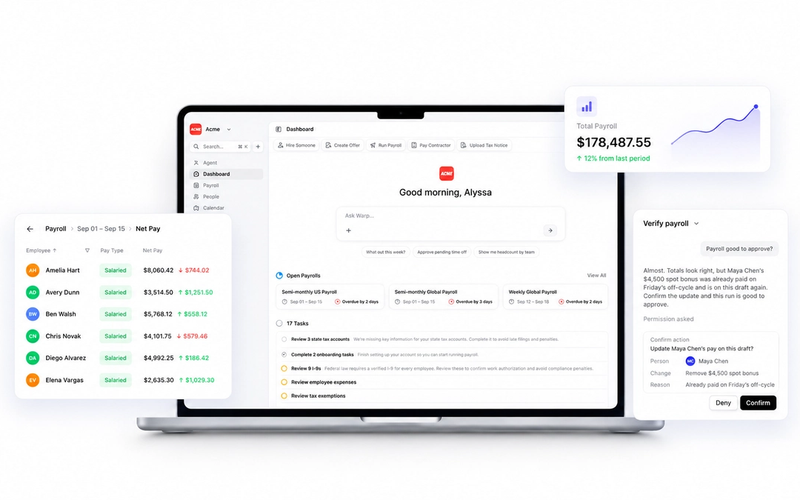
Lead with the outcome in a skeptical category. Gabriella shared that Warp runs on Warp. In payroll, where a mistake is costly, Warp's early branding didn't lead with AI. It led with automation, product usage, and hours saved.
Earn Trust First: Ingredient Brands and Through Lines
When your product sits inside someone else's, brand building looks different. Hannah Hughes explained that Plaid does not want to interrupt the relationship Coinbase or Cash App has with its customers. Its job is to be the trust seal that helps those companies convert. Marketers call this ingredient branding, and Visa and Mastercard are the classic examples. Her view is that B2B companies have a lot to learn from it.
For a company with many businesses under one name, Ben Shen offered a second tool: find the through line. A company's mission is usually broader than any one product, which leaves room for many chapters. At Coinbase, the through line is people who want to use frontier technology to improve their financial lives. Across the consumer, institutional, and developer businesses, trust and simplicity are the common thread, even in a category known for volatility.
Ben also noted a shift in crypto that mirrors what is happening in AI. Early on, products went to market technology first. Now they start with the customer's needs, pain points, and anxieties, and the technology fades into the background.
Michael Duane described the same shift from the consumer side. Cash App began as a peer-to-peer app that felt social and casual. Moving that brand toward saving for a home or a car is a big shift, and the team treats the original brand as a strong asset to expand rather than abandon.
B2B Branding When the User Is Not the Buyer
In B2B, the person who uses your product every day often isn't the one who signs the contract. Christina Cordova said the buyer may be a CIO, CTO, or procurement lead who does not care that a product is nicer to use. So Linear's job is to turn everyday users into champions inside their companies, and to give them what they need to win a sticky internal conversation.
Her playbook, drawn from the panel and a question from the audience:
- Build a great product first. The brand starts there, and people have to love it on its own.
- Lower the barrier to falling in love. Linear has always had a free version anyone can use for side projects. It makes no money from those users, but they build real affinity.
- Follow your champions. When someone who loved Linear changes jobs, the team goes after the new company.
- Hand champions the materials. Linear built a site to make the case internally, and its sales team will help respond to objections people share in their own Slack threads.
- Keep them close after the deal. Swag, events, etc to have them stay an advocate.
The second half is making the choice feel safe. Christina noted that for a company that has been around for 30 years, picking a newer product can feel risky. Linear talks openly about its funding and years of positive cash flow to signal it will be around. Then it carries one experience across every touchpoint: a consultative sales process and a support team that responds with a human touch, which customers notice because it is rare.
When to Kill Your Own Brand
Every brand eventually reaches a point where what people know you for is smaller than what you are becoming. The panel had three versions of that story.
Linear: declare the old category dead. Linear built its name as the issue tracker people finally enjoy using. Christina Cordova said sometimes you have to kill what you are known for to be reborn, so Linear published a post called Issue tracking is dead. The title was a shock on purpose, to get people to read what came next. The substance: agents now create a large share of the work in Linear. Christina said over 50% of work is created by an agent outside the product, typically through Linear's MCP server. For context, SaaStr reported the share rising from 3% to 50% in a year, while Linear's March announcement put agent-authored new issues near 25%. Her point on pacing: not everyone changes at the same speed, so you have to bring users along.
Cash App: follow what customers already call you. Ben Shen recalled that when the product was Square Cash, the team renamed it Cash App. The head of design at the time pointed out that people on Twitter were already calling it that, and many of them didn't know it came from Square. The team also resisted architecting the product around Square's sellers early on, because it would have limited how far the consumer product could grow. The two audiences were connected years later, through products like Cash App's neighborhood commerce features.
Intercom to Fin: let the name catch up. Hannah Hughes pointed to Intercom, which in May 2026 renamed the company to Fin after its AI agent. The Intercom name continues as the help desk platform.
The counterweight came from Michael Duane, who prefers expanding a strong brand asset over launching a second name when the first still carries value. Hannah added that Block's separate brands for Cash App and Square are part of why each built a loyal following with a very different audience. Whether to build a brand family or one name is a judgment call, and the common thread is that the decision follows customer reality, not org charts.
Think of Your Brand Like a Watch
How do you stay recognizable while the product changes quickly? Hannah Hughes offered the best framing of the night: a brand is like a watch, where some dials should move slowly and others quickly.
The slow dials are the ones that should endure for years: your mission and your positioning, which she called a storytelling mechanism you can use over many years. The fast dials are product updates, which should move at the speed of the industry, and the visual system, which is a good way to signal freshness. The parts have to work together as one system.
The other panelists showed what each dial looks like in practice.
- Slow dial, Coinbase. Ben Shen said the brand is associated with change, and its recent line about updating the financial system fits a mission built on money that keeps evolving. The open question the team asks is whether a stranger on the street would still describe Coinbase only as a place to buy crypto.
- Slow dial, Linear. Christina Cordova wants the people who loved Linear in 2022 to love it today. She said brands lose their way when they try to be everything to everyone, and that great products are defined by what you choose not to build.
- Fast dial, Cash App. Michael Duane described a brand that has taught customers to expect surprise, from offbeat campaigns to a physical tag you can pay with. Its colors and video style are built to pop off the page.
Christina added a point about authenticity. People forgive a product that changes when they believe the builders are changing it for the right reasons, which is easier to show when you can point to features you made free as well as ones you charged for.
Build the Brand for Agents, Not Only Humans
A new question is entering brand building: what does your brand mean to a user that is not a person? Gabriella said agent interactions on Warp are now surpassing human ones, and the panel's companies are seeing the same shift.
Three practical lessons emerged from the discussion.
- Make agent access a product decision. Christina Cordova said Linear launched an agent platform so that adding an agent is not an extra seat. Linear works with off-the-shelf agents and with homegrown ones, such as the internal agents built by Ramp and Coinbase, through shared APIs. For large customers, it adds admin approval for each connection.
- Design permissions before you need them. Gabriella described how every action the Warp agent takes, whether through MCP or API, comes from the same core action primitives. Admins decide who can use which workflows and what each can do, whether that means approving every action or never allowing a given one. Hannah Hughes said Plaid is pushing for consumers to set their own rules for agent purchases, since Plaid wants to stay a neutral, consumer-protective layer.
- Write your site so agents can read it. Gabriella noted that the principles for agent-friendly products now show up in AI search and AEO: concise instructions up front, clear routing instead of endless clicking, and no heavy JavaScript.
The brand implication is simple. Trust, consent, and safety by design are no longer only messaging. They are product behavior that agents and the admins overseeing them experience directly.
Brand Building Strategies to Steal
If you take one thing from the panel, it is that an inevitable brand is earned in the product long before it shows up in the logo. Here are the brand-building strategies the operators agreed on, in the order to apply them:
- Define the product's philosophy and value proposition before the identity.
- Keep marketing translucent and say plainly who you are for and who you are not for.
- Spend time with customers outside your own office and your own use case.
- If you are infrastructure, act like an ingredient brand and earn your customers' trust.
- Find the through line that keeps many products under one brand.
- In B2B, turn users into champions and give them the materials to win internally.
- Move the slow dials slowly, move the fast dials quickly, and retire a name only when customers have already moved on.
- Treat agents as users, with clear access, permissions, and readable pages.