
What is comp time for salaried employees?
Comp time, short for compensatory time, is paid time off given for extra hours worked. For salaried employees who are exempt from overtime under the Fair Labor Standards Act, no federal law requires it. When a company offers extra time off for long hours, it is a perk the employer designs, and the written policy decides who qualifies, how it accrues, and what happens to unused balances.
That is different from comp time for hourly, nonexempt employees. Private-sector employers generally cannot give comp time in place of overtime pay that nonexempt employees have earned. The Department of Labor's overtime guidance explains who is exempt and who is not, and state rules vary, so confirm eligibility and state requirements before you roll out a program.
Companies use many names for the same idea: comp time, bonus time, flex time, earned time off, or time off in lieu. The name matters less than the mechanics. If you already have a PTO policy, a comp time program sits alongside it, and you need to write both so they don't contradict each other.
Why custom bonus time policies get complicated fast
We see a common pattern across clients. Salaried employees earn extra time off when they work more than a set number of hours in a period. The time is either paid out in a later paycheck or banked for future use. The idea is to recognize people who put in extra hours on projects without rewarding hours that weren’t worked. Common exclusions include paid volunteer time and unpaid leave, each applied consistently with how the company treats comparable leave.
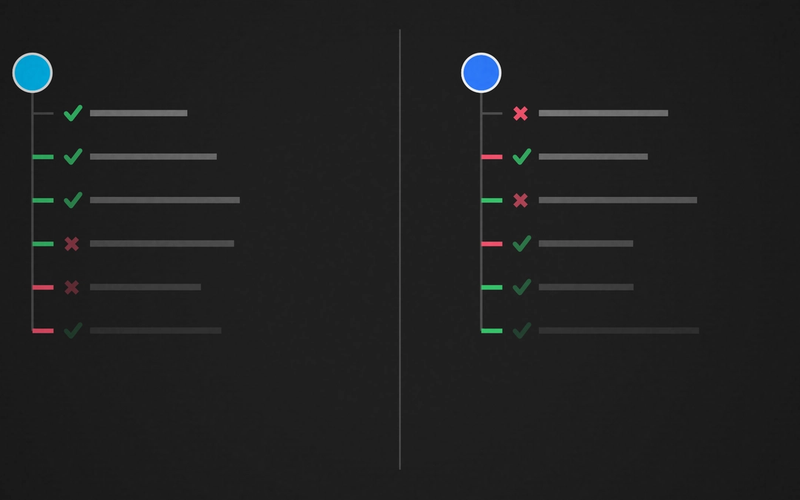
So the policy adds rules, each an if-then statement, and the statements stack.
At small scale, one capable HR or finance person can run this well. They know the policy, they know the people, and they check each timesheet line by line. The problem comes as a company grows.
Five exceptions that break manual tracking
Paid volunteer time
Many companies pay for volunteer hours but do not want them to count toward bonus time, because the employee was not doing regular work. The rule is easy to state. The enforcement problem is that volunteer hours have to be recorded in a way that a calculation can tell them apart from regular hours, every pay period, for every employee.
FMLA leave
In its fact sheet on employee protections under the FMLA, the Department of Labor says employees on FMLA leave have the same right to bonuses and conditional payments as employees on comparable leave. It also says leave cannot be counted against an employee in an attendance point system. An employee on unpaid FMLA leave can lose eligibility for a bonus only if the policy treats all comparable unpaid leave the same way.
For a bonus time policy, that means a rule excluding unpaid leave from accrual has to be written as a rule about unpaid leave, and applied that way every time. If it is applied only when someone remembers, it is an inconsistency waiting to be found.
Military leave
The Uniformed Services Employment and Reemployment Rights Act, or USERRA, protects service members' reemployment rights and certain benefits. The Department of Labor's USERRA guide is the place to start. How an accrual formula should treat a period of service is a question to settle with employment counsel before the policy is written, not after the first employee returns.
Workers' compensation and disability leave
Time out on workers' compensation, short-term disability or long-term disability is often unpaid, and it can run alongside FMLA leave. Some policies log those hours so the company can see where the time went, while excluding them from accrual. That means the system has to record the hours and then ignore them for the calculation, even when two leave types overlap.
Part-time and flexible schedules
Employees may move to part-time status for graduate school, caregiving, or a temporary flexible schedule. Each change can alter the hours threshold, the proration, and the effective date.
Comp time for salaried employees does not scale on spreadsheets
A manual process fails in predictable ways as a company grows.
One owner holds the logic. The rules live in spreadsheet formulas, a few emails, and one person's head. When that person is out, or leaves, the policy goes with them.
Every pay period is a line-by-line review. Someone has to check each employee's hours against each exclusion. Review time grows with headcount and with the number of leave cases.
Consistency is hard to prove. Leave-related exclusions can be questioned. If two employees on similar leave are treated differently, you need to explain why, and a spreadsheet rarely keeps the reasoning.
Mid-period changes create retroactive fixes. A status change, a leave start date entered late, or a corrected timesheet means recalculating something that was already paid.
The fix is not a better spreadsheet. It is a policy written precisely enough that a system can apply it, plus a clear path for the cases that need a human.
How to write a comp time policy that can be enforced
A policy that can be enforced consistently has the same core principles whether a person or software applies it.
- Eligibility. Say who qualifies: job levels, exempt status, employment status, and any waiting period.
- Qualifying hours and threshold. State the number of hours that trigger time off, and the period over which you measure it.
- Excluded time, by category. List every category that does not count, such as volunteer time and each type of unpaid leave. Do not rely on "other leave."
- Leave rules, written separately. Give FMLA, military leave, workers' compensation, and disability their own lines, with the treatment your counsel has confirmed for each.
- Status changes. Explain how thresholds change for part-time or flexible schedules and which date they take effect.
- Payout or bank. Say whether earned time is paid in a later paycheck, banked for use, or both, and how quickly it must be used.
- Caps, expiry, and separation. State any balance limit and what happens to unused time when someone leaves, checking your state's rules on earned time off.
- Exception owner. Name who decides cases the policy does not cover, and how that decision is recorded.
- Version and effective date. Date every revision so you can show which rules applied to which period.
The principle behind the list is simple: a policy can only be enforced as far as it is written down. The unwritten parts are where inconsistency and risk accumulate.
How Warp's agent and AI routines handle policy-driven time off
Warp already provides the building blocks that spreadsheets approximate. Time-off policies support accrual rules, carryover, caps, waiting periods, and pro-rating for new hires. Warp blocks requests that conflict with already approved time off, and admins can enter time off on an employee's behalf, including retroactively, so the record stays complete when someone tells a manager verbally and forgets to officially file a request.
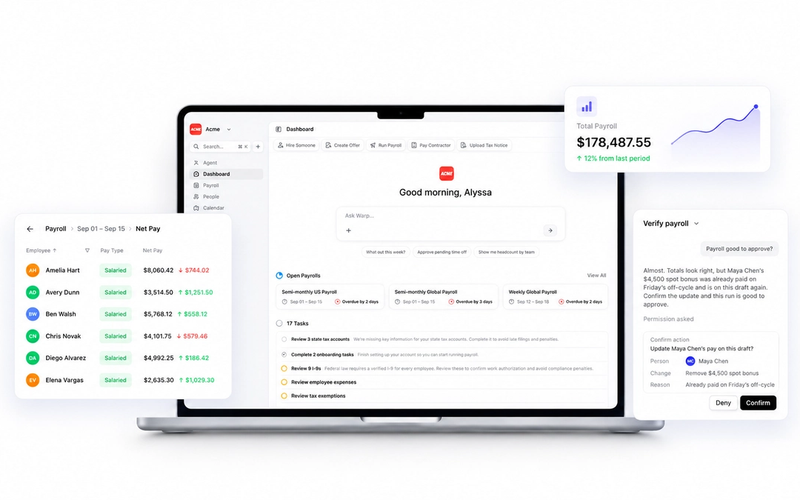
The newer layer is the Warp Agent. Agent routines let a company describe a recurring or event-driven process in plain English and run it on a schedule or when something happens. You can upload an internal company document and adjust it in plain English instead of configuring a traditional workflow builder. Admins set what data a routine can access, what it can do on its own, and what needs approval. Warp keeps an audit trail of routine activity, and when the agent hits an exception outside its authority, it hands the task to an administrator.
That design is built for a policy like bonus time, where exceptions are the whole point. Warp's time tracking captures hours through clock in and out or timesheets, lets HR set rules by worker policy or group, routes hours through manager approval, and has HR review exceptions before payroll closes. Because hours, approvals, time off, and payroll live in the same platform, a routine can be set up to apply the exclusions the policy lists and to send cases that need judgment, such as an employee who changed to part-time mid-quarter, to an admin.
Every policy is different, so the first step is to read the written policy and confirm which rules the agent can apply on its own and which it should route to a person. The condition is the same for any employer: the agent can only follow what is written down, which is why the checklist above comes first.
What to do next
Start with the document. Pull your current comp time or bonus time policy, and mark every rule that exists only as a habit. Write those down, confirm the leave rules with employment counsel, and date the result. You will have a policy a person can apply consistently, and a policy that software can apply too.
Comp time for salaried employees works best when the rules are explicit, the exceptions have an owner, and the record shows what was applied and why. To see how Warp handles time-off policies and agent routines, book a demo.
Frequently asked questions
Is comp time legal for salaried employees?
In most cases, yes. Exempt salaried employees are not owed overtime under the FLSA, so extra time off is a discretionary benefit set by your written policy, not a substitute for overtime pay. Private employers generally cannot swap comp time for overtime pay owed to nonexempt employees, and state rules vary, so confirm eligibility and your state's requirements before launching a policy.
How is comp time calculated for exempt employees?
There is no federal formula for exempt employees. Your policy sets it: the hours threshold, the rate at which extra hours convert to time off, and which time categories count. The 1.5-to-1 ratio in many articles comes from rules for public-sector overtime comp time, not from private-sector programs for exempt staff.
Can comp time be taken away?
It depends on your written policy and your state. Some states treat accrued time off as earned wages, which limits forfeiture, so any cap or expiration should be written in advance and applied consistently to everyone. Talk to employment counsel before removing balances that were already earned.
Can an employer require an employee to use comp time?
Often, if the written policy provides for it, but state law and the policy language control. Spell out scheduling rules, notice periods, and expiry so the requirement is not decided case by case.
This article is general information, not legal advice.