
If you're running payroll for the first time, the number of tax line items on a single paycheck can be disorienting. Social Security, Medicare, federal income tax, state income tax, FUTA, SUTA. Some of these are payroll taxes. Some are income taxes. They come out of the same paycheck, but they work completely differently and the rules for each are not the same.
Understanding the distinction matters because the penalties for getting them wrong are different, the filing schedules are different, and the way they scale as you hire across states is different. Here's a clear breakdown for 2026.
What is payroll tax?
Payroll taxes are flat-rate taxes tied directly to employment. They fund specific federal programs: Social Security, Medicare, and unemployment insurance. Together, Social Security and Medicare taxes are known as FICA taxes. Both the employer and the employee pay payroll taxes, and the rates don't change based on how much someone earns (with one exception for high earners).
For 2026, the payroll tax rates are:
Social Security: 6.2% from the employee, 6.2% from the employer. This is also called the OASDI tax (Old-Age, Survivors, and Disability Insurance). It applies to the first $184,500 in wages. Once an employee earns more than $184,500 in a calendar year, neither side owes Social Security tax on the remaining wages.
Medicare: 1.45% from the employee, 1.45% from the employer. There is no wage cap for Medicare. Every dollar of wages is subject to Medicare tax regardless of how much someone earns.
Additional Medicare tax: 0.9% on wages above $200,000 for single filers. This is employee-only. The employer does not match it but is responsible for withholding it once the employee crosses the $200,000 threshold.
FUTA (Federal Unemployment Tax): 6% on the first $7,000 of each employee's wages. After state unemployment tax credits, the effective rate drops to 0.6% for most employers. This is employer-only. Employees don't pay FUTA.
SUTA (State Unemployment Tax): Rates vary by state and by your company's claims history. New employers typically start at a default rate (often around 2.7%) and the rate adjusts annually based on how many former employees have filed unemployment claims. More on this below.
The combined employer cost for federal payroll taxes is roughly 7.65% of each employee's wages (6.2% Social Security plus 1.45% Medicare) plus FUTA and SUTA on top. For a $100,000 salary, that's at least $7,650 in employer-side payroll taxes before state unemployment.
What is income tax?
Income tax is a progressive tax on an individual's total earnings. Unlike payroll taxes, income tax rates increase as income goes up. The money funds general government operations, not specific programs.
For 2026, the federal income tax brackets are:
| Taxable Income (Single Filers) | Tax Rate |
|---|---|
| Up to $11,925 | 10% |
| $11,926 – $48,475 | 12% |
| $48,476 – $103,350 | 22% |
| $103,351 – $197,300 | 24% |
| $197,301 – $250,525 | 32% |
| $250,526 – $640,600 | 35% |
| Over $640,600 | 37% |
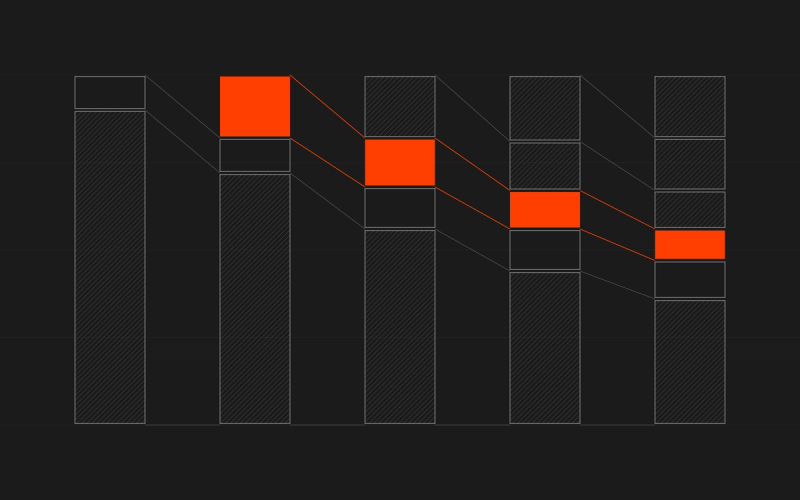
These rates are marginal, meaning you only pay each rate on the income that falls within that bracket. A common misconception is that earning more bumps your entire income into a higher rate. It doesn't.
For example, a single filer earning $100,000 in taxable income pays:
| Bracket | Income in Bracket | Tax Owed |
|---|---|---|
| 10% | First $11,925 | $1,192.50 |
| 12% | $11,926 to $48,475 | $4,386.00 |
| $48,476 to $100,000 | 22% | $11,335.50 |
| Total | $16,914.00 |
That's an effective tax rate of about 16.9%, not 22%, even though $100,000 falls in the 22% bracket. Compare that to payroll taxes on the same salary: a flat $7,650 from the employee (6.2% Social Security + 1.45% Medicare) regardless of filing status, deductions, or credits. No brackets. No marginal rates. Just a fixed percentage.
The key difference: income tax is only withheld from the employee's paycheck. The employer does not pay income tax on behalf of the employee. The employer's job is to withhold the correct amount based on the employee's W-4 and send it to the IRS.
State income tax adds another layer. Nine states (Alaska, Florida, Nevada, New Hampshire, South Dakota, Tennessee, Texas, Washington, Wyoming) have no state income tax. The rest have their own brackets and rates that the employer must also withhold and remit. Some cities (for example: New York City, Philadelphia, Newark) add local income taxes on top of that. If you want to see the local tax rates, you can learn more in our state payroll tax guide.
How payroll taxes and income taxes are different
Rates: Payroll taxes are flat. Everyone pays 6.2% for Social Security regardless of income (up to the wage base). Income taxes are progressive. For example, someone earning $50,000 pays a lower effective rate than someone earning $250,000.
Who pays: Both the employer and employee pay payroll taxes (split roughly 50/50). Only the employee pays income tax. The employer withholds it but doesn't owe a matching amount.
What they fund: Payroll taxes are earmarked for Social Security, Medicare, and unemployment insurance. Income taxes go into the general fund and pay for everything from infrastructure to defense.
Wage caps: Social Security tax stops at $184,500 in 2026. Medicare has no cap. Income tax has no cap. FUTA applies only to the first $7,000 per employee.
Filing: Employers report payroll taxes quarterly on Form 941 and annually on Form 940 (for FUTA). Income tax withholding is reported on the same Form 941 alongside payroll taxes but is reconciled on each employee's W-2 at year end.
What changes to payroll or income taxes happened in 2026 under the One Big Beautiful Bill Act?
The OBBBA introduced a significant wrinkle that makes the payroll tax vs. income tax distinction more important than ever for employers.
Tips and overtime are now deductible for income tax but still fully taxable for payroll tax. If an employee earns qualified tips or FLSA-mandated overtime, they can deduct that income on their 1040 to reduce their federal income tax. But the same income is still subject to full FICA withholding (Social Security and Medicare). Employers must still withhold payroll taxes on tips and overtime at the standard rates.
This means your payroll system needs to track qualified tips and overtime separately and apply different tax treatment to the same wages depending on whether you're calculating payroll tax or income tax. New W-2 Box 12 codes (TT for overtime, TP for tips) are required starting with the 2026 tax year.
The 1099 reporting threshold increased from $600 to $2,000. This reduces the number of 1099 forms you need to issue for contractor payments but doesn't change payroll tax obligations for W-2 employees.
Where this gets complicated for startups hiring across states
The definitional difference between payroll tax and income tax is straightforward. The operational reality is where founders lose time and money.
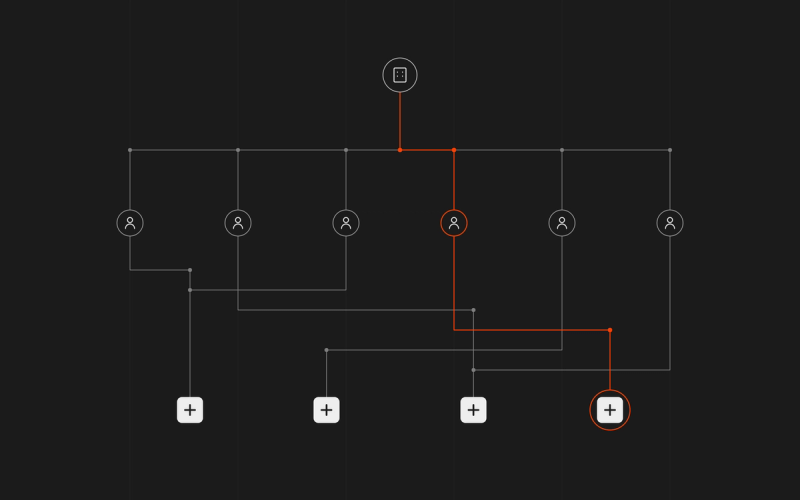
When you hire your first employee in a new state, you don't just add one new tax obligation. You potentially add state income tax withholding, state unemployment insurance registration, and sometimes state-specific payroll taxes like disability insurance (California, New York, New Jersey, Hawaii, Rhode Island, Puerto Rico) or paid family leave contributions (13 states and growing).
Each state has its own registration process, its own rates, its own filing schedule, and its own penalties for getting it wrong.
A startup with 20 employees across 8 states might be managing 8 separate state income tax withholding obligations, 8 state unemployment insurance accounts with 8 different rates, disability insurance in some of those states, paid family leave contributions in others, and local taxes if anyone works in a city with a payroll tax (New York City, San Francisco, Portland, Philadelphia, among others).
This is the part that doesn't show up in a standard "payroll tax vs. income tax" explainer. The federal distinction is clean. The state-level reality is where compliance breaks down, because every new hire in a new state triggers a cascade of registrations and filings that multiply the complexity.
We process payroll and tax compliance across all 50 states at Warp. The pattern we see repeatedly is founders who understand the federal taxes perfectly well but get caught by a state obligation they didn't know existed. A new hire in New Jersey triggers Temporary Disability Insurance and Family Leave Insurance contributions that don't exist in most other states. A remote employee who moves to Oregon mid-year triggers a new state income tax withholding obligation even though nothing about the employment relationship changed. An employee who works from home in a city with a local payroll tax creates an obligation the employer may not discover until a notice arrives.
The compounding effect is what makes multi-state payroll fundamentally different from single-state payroll. Each additional state doesn't add one tax. It adds several.
How Warp handles payroll and income tax across every state
Warp is the only AI-native HR and payroll platform built for ambitious companies. When you hire someone in a new state, Warp's AI agents automatically register your company with that state's tax agencies, set up the correct withholding for both payroll taxes and income taxes, and handle ongoing filings.
You never visit a government website. You never figure out which forms to file. You never calculate whether New Jersey's TDI rate changed this quarter or whether your SUTA rate in Colorado was adjusted based on your claims history.
Every Warp customer gets a dedicated Account Manager and Benefits Advisor included to guide them through payroll setup, multi-state expansion, and benefits selection. When a tax notice arrives, Warp resolves it before it reaches your inbox. When a state changes its rates, Warp updates your withholding automatically.
The distinction between payroll tax and income tax matters. But the distinction between doing it yourself and having it done for you matters more.
See how Warp handles multi-state payroll and compliance
Frequently Asked Questions
Do employers pay both payroll tax and income tax?
Employers pay their share of payroll taxes (6.2% Social Security, 1.45% Medicare, FUTA, SUTA). Employers do not pay income tax on behalf of employees. They withhold income tax from employee paychecks and remit it to the IRS and applicable state agencies, but the tax liability belongs to the employee.
What happens if I don't withhold the right amount of payroll tax?
Payroll tax penalties are severe because Social Security and Medicare withholdings are classified as "trust fund taxes." The IRS treats failure to remit trust fund taxes as one of the most serious compliance violations. The Trust Fund Recovery Penalty (TFRP) can make individual officers and directors personally liable for the unpaid amount, even if the business is structured as an LLC or corporation.
How do payroll taxes work for remote employees in different states?
When an employee works remotely in a state different from your company's headquarters, you generally owe state income tax withholding and state unemployment tax in the state where the employee physically works. Some states have reciprocity agreements that simplify this. Others don't. Each new state requires separate registration and ongoing filings. Learn more about state nexus and payroll obligations.
Are payroll taxes the same in every state?
Federal payroll taxes (Social Security, Medicare, FUTA) are the same everywhere. State payroll taxes vary significantly. State unemployment insurance rates range from under 1% to over 10% depending on the state and your claims history. Some states add disability insurance, paid family leave taxes, or local payroll taxes that don't exist in other states.
Did the OBBBA change payroll tax rates?
No. The 2026 OBBBA did not change Social Security, Medicare, or FUTA rates. The Social Security wage base increased to $184,500 (from $176,100 in 2025) as part of the standard annual inflation adjustment. The major change is that qualified tips and overtime are now deductible for income tax purposes while remaining fully subject to payroll tax, creating a new tracking and reporting requirement for employers.
What's the total payroll tax cost per employee?
For a $100,000 salary, the employer's share of federal payroll taxes is approximately $7,650 (6.2% Social Security + 1.45% Medicare) plus FUTA ($42 at the 0.6% effective rate on the first $7,000) plus state unemployment (varies). Total employer-side tax cost typically runs 8% to 10% of gross wages before state-specific additions.
Related:
- Types of Payroll Taxes: The Complete 2026 Employer Guide
- What Is FICA Tax? 2026 Rates, How It Works
- State Nexus and Payroll: When Hiring Remote Creates Tax Obligations
- Big Beautiful Bill 2026 Payroll Guide