![Best Mosey Alternatives for Business Compliance [2026]](https://cdn.sanity.io/images/5tzoal2j/production/e5013492f64ac04508d6cb6c598df108fe4163ed-3840x2160.jpg?rect=192,0,3456,2160&w=1400&h=875&q=90)
Gusto just acquired Mosey. If you're a Mosey customer running payroll on Rippling, ADP, Paychex, or anyone other than Gusto, your compliance platform is going away on June 30, 2026.
This isn't speculation. Mosey CEO Alex Kehayias sent an email to all non-Gusto customers confirming the deadline. After June 30, Mosey's compliance services — state registrations, filings, renewals, and monitoring — will only be available through Gusto's platform.
You're not alone if this caught you off guard. According to Gusto's own research, 60% of companies now have at least one employee living more than 100 miles away — up from 50% in 2021. That means most Mosey customers are managing multi-state compliance across multiple jurisdictions, and losing their compliance platform with 82 days' notice is a serious operational risk.
This guide compares the best Mosey alternatives for companies that need multi-state compliance management without changing payroll providers. We evaluated each platform based on what Mosey customers actually need: automated state tax registrations, ongoing compliance monitoring, support quality, and migration speed.
What we cover:
- What happened to Mosey and the June 30, 2026 cutoff
- Side-by-side comparison of the four best alternatives
- Which platforms handle state registration automatically vs. make you do it yourself
- How to evaluate total cost of ownership across providers
- Step-by-step migration guide to switch before the deadline
- What happens to your compliance data when Mosey shuts down for non-Gusto customers
What Happened to Mosey?
On April 9, 2026, Gusto announced it had acquired Mosey to bring state and local compliance management directly into Gusto's platform. The acquisition gives Gusto's 400,000+ customers a single place to manage payroll, HR, and business compliance.
The numbers show why this matters. Businesses with fewer than 50 employees face roughly $14,700 per employee per year in compliance costs — approximately 20% more than large enterprises with dedicated legal teams. And roughly 15,000 new laws are passed across all levels of government every year, with notifications often sent to physical addresses businesses no longer staff.
For Gusto customers, this is a welcome addition. For everyone else, it's a forced migration.
Here's what Mosey's CEO communicated to non-Gusto customers:
- Hard deadline: June 30, 2026. Mosey's compliance services will only be available to Gusto customers after this date. If you use a different payroll provider, your access ends.
- Incentive to switch to Gusto: Mosey is offering 6 months of free Gusto payroll to encourage customers to move their entire payroll stack. After that, you're locked into Gusto's pricing. (Not sure Gusto is right for you? See our top Gusto alternatives for scaling startups.)
- Transition packet: Mosey will provide a packet with your account data, compliance status, filing history, and state registration details.
- Customer Success outreach: Mosey's team will proactively reach out over the coming weeks to help guide the offboarding.
The real question most Mosey customers are asking: do I switch my entire payroll to Gusto to keep compliance, or do I find a dedicated compliance alternative? For most companies, the answer is the latter. Switching payroll providers disrupts direct deposit, benefits enrollment, and tax withholding for every employee. That's a major operational undertaking just to maintain a feature. If you're considering it, read our step-by-step guide to setting up payroll to understand what's involved.
The 4 Best Mosey Alternatives at a Glance
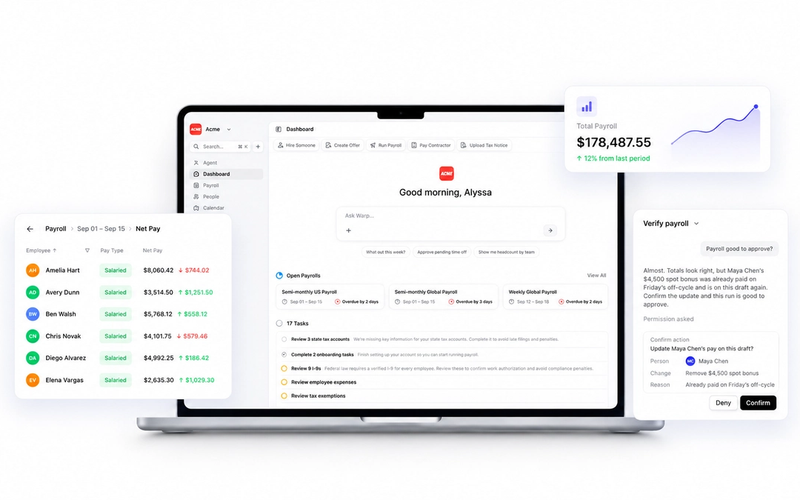
Warp — Best for multi-state fast growing companies. Automatic state registrations in all 50 states. Full ongoing compliance: filings, notices, monitoring. Payroll included (or use standalone). AI-native agents handle everything. 5-min median support response with dedicated AM. Dedicated Mosey migration in under 10 minutes.
Harbor Compliance — Best for regulated industries (healthcare, finance). Service-based state registrations (manual). Ongoing compliance covers license renewals and annual reports. No payroll included. Software + services hybrid. Phone and email support. Standard onboarding support for migration.
Middesk — Best for API-first tax registration. API-based registrations with a payroll tax focus. Registration only — no ongoing compliance monitoring. No payroll included. API automation for developers. Email support. Requires API setup to migrate.
AbstractOps — Best for remote-first teams. Service-based state registrations. Ongoing compliance covers annual reports and registered agent. No payroll included. Limited automation. Email support. Onboarding call for migration.
Currently, G2 lists Mosey's top alternatives as Rippling, Dayforce, and Paycom — but those are enterprise HR platforms, not direct compliance replacements. CB Insights and Capterra list VirgilHR, AbstractOps, and others. The four alternatives below are the most relevant for Mosey customers who need actual state compliance automation.
1. Warp: Best for Startups Who Want Compliance on Autopilot
The pitch: An AI-native platform built specifically for startups, where compliance happens automatically in the background. The closest thing to a direct Mosey replacement — but with payroll, benefits, and liability coverage included.
Why Mosey customers switch to Warp: Warp was built by YC founders who experienced the pain of scaling payroll firsthand. Where Mosey gave you a compliance dashboard to manage tasks, Warp's AI agents actually complete the tasks — opening state tax accounts the moment you hire in a new state, filing quarterly returns, and resolving tax notices before they reach your inbox. You never touch a .gov website.
Every company gets a dedicated Account Manager and Benefits Advisor included, not as an upsell. You don't have to spend hours on hold with tax agencies or worry about compliance mistakes.
The fundamental difference from Mosey: if Warp makes a compliance mistake, Warp pays the penalty. Not you. Mosey didn't offer that level of liability coverage. The IRS reports that 40% of small businesses face payroll tax penalties each year. Having a provider that takes financial responsibility for errors isn't a nice-to-have — it's essential.
Who it's for: Seed to Series C startups with distributed teams who want to stop thinking about compliance entirely. AI-native employee management built for ambitious, fast-growing companies. Designed for 1 to 1,000+ employees.
Key Features
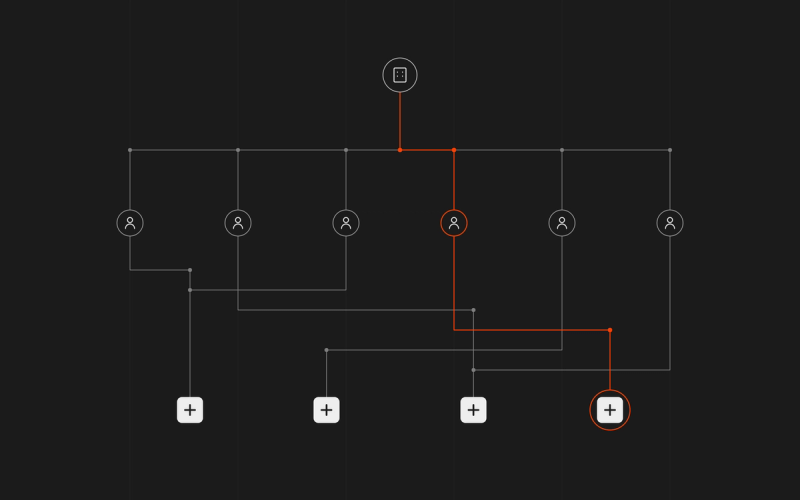
- Automatic state tax registration. Hire in a new state, and Warp opens your tax accounts automatically. No $200-per-form fees. No waiting. Most registrations complete within 5-10 business days.
- Compliance that runs itself. From state registrations to quarterly filings to notice resolution, AI handles the busywork. Your finance team focuses on strategy, not paperwork. Need to understand what's required across states? See our multi-state payroll compliance guide.
- Payroll-agnostic compliance. Unlike Mosey's new reality under Gusto, Warp doesn't force you to switch payroll providers. You can use Warp for compliance standalone, or get payroll, benefits, and HR in one platform.
- Fast human support. NYC-based support team with a 5-minute median response time. No chatbots, no offshore scripts. Under Gusto's 400,000-customer base, Mosey's small-team responsiveness will disappear.
- 10-minute migration. Bring your Mosey transition packet, and most startups are fully set up in under 10 minutes. Warp handles the data transfer and ensures no compliance gaps.
Pricing
| Plan | Platform Fee | Per Employee |
|---|---|---|
| Pro | $89/month | $35/employee/month |
| Premium | $129/month | $50/employee/month |
Flat, transparent pricing per employee. No base fees that balloon as you add states. No surprise charges for compliance features. View full Warp pricing.
Note for Mosey customers: The core difference between Mosey and Warp is execution, not just visibility. Mosey surfaced compliance requirements and tracked deadlines. Warp's AI agents actually complete the work — opening accounts, filing forms, resolving notices. And unlike the new Gusto-Mosey bundle, Warp doesn't require you to change your payroll provider.
Thousands of fast-growing startups trust Warp to stay compliant while they scale. See a demo and try the platform today.
2. Harbor Compliance: Best for Regulated Industries
The pitch: A compliance services company that combines software with managed services, specializing in business licensing and entity management for companies in heavily regulated industries. Visit Harbor Compliance.
Why companies consider it: Harbor Compliance focuses on the intersection of entity management and professional licensing — which matters in healthcare, finance, insurance, and other regulated industries where compliance extends well beyond payroll tax. They track license requirements, renewal deadlines, and state-specific obligations across every jurisdiction where you operate.
Who it's for: Companies in regulated industries that need professional licensing management alongside entity compliance. Particularly strong for healthcare organizations, financial services firms, and nonprofits operating across multiple states.
The tradeoff: Harbor handles entity and licensing compliance, but doesn't touch payroll tax registrations, quarterly filings, or tax notice resolution — the areas where Mosey was strongest. If payroll compliance was your primary Mosey use case, you'll need Harbor plus a second solution. Pricing isn't published, which makes comparison shopping harder during a time-sensitive migration. And their approach is more service-based than software-driven, which means slower turnaround for high-volume filings.
3. Middesk: Best for API-First Tax Registration
The pitch: An identity and compliance infrastructure company that offers a Tax Registration API, letting platforms programmatically register businesses with state tax agencies. Visit Middesk.
Why companies consider it: Middesk solves a different problem than Mosey. Rather than giving you a dashboard to manage compliance, they provide API infrastructure that lets you embed state tax registration into your own product or workflows. Their Tax Registration API handles unemployment insurance, withholding, and Secretary of State filings programmatically.
Who it's for: HR platforms, payroll providers, and tech companies that want to embed state tax registration into their own product via API. If you have engineering resources and want to build compliance into your stack, Middesk is the infrastructure layer.
The tradeoff: Middesk handles registration, not ongoing compliance. You won't get quarterly filings, tax notice resolution, or compliance monitoring. And if you're a startup founder looking for a Mosey replacement you can set up this afternoon, Middesk's API-first approach requires engineering work to integrate. It's infrastructure, not an end-user product.
4. AbstractOps: Best for Remote-First State Registrations
The pitch: A state compliance service for remote companies, handling entity registrations, registered agent services, and annual report filings across all 50 states. Visit AbstractOps.
Why companies consider it: AbstractOps focuses specifically on the entity compliance challenges that remote-first companies face when hiring across state lines. They handle foreign qualifications, registered agent services, and annual report filings — the administrative compliance work that trips up distributed teams.
Who it's for: Remote-first startups that primarily need entity registrations and registered agent services across multiple states. If annual report filings and foreign qualifications are your main compliance gap, AbstractOps covers that niche.
The tradeoff: Limited scope compared to Mosey. AbstractOps handles entity compliance but doesn't cover payroll tax registrations, ongoing tax filings, or tax notice resolution — the areas where most Mosey customers got the most value. As a smaller startup, their capacity for handling a rapid wave of Mosey migrations may be limited. And the platform is service-driven rather than AI-automated, so expect human turnaround times.
How to Choose the Right Mosey Alternative
Choose Warp if:
- You need full compliance automation — state registrations, quarterly filings, and tax notice resolution
- You want payroll and compliance in one platform, or compliance standalone without switching payroll
- You're hiring across multiple states and need registrations handled automatically
- You want someone accountable when compliance errors happen — Warp pays the penalty, not you
- You need to migrate fast — most startups switch in under 10 minutes
Choose Harbor Compliance if:
- You're in a regulated industry that requires professional licensing management alongside entity compliance
- Business licensing and renewals are your primary concern, not payroll tax
- You already have payroll tax compliance handled and need a licensing-focused solution
Choose Middesk if:
- You're building a platform that needs to embed tax registration via API
- You have engineering resources to integrate an API-first solution
- Your primary need is initial state tax registration, not ongoing compliance monitoring
Choose AbstractOps if:
- You're a remote-first startup that primarily needs entity registrations and registered agent services
- Annual report filings and foreign qualifications are your main compliance gap
- You don't need payroll tax compliance automation or tax notice resolution
Not sure whether you need a standalone compliance tool or a PEO vs. EOR? That's a different decision — read our breakdown to understand the tradeoffs.
How to Migrate from Mosey Before June 30
The 82-day window between the announcement and the cutoff is tight. Here's what to do now.
- Request your transition packet from Mosey. Mosey confirmed they'll provide a packet with your account information, compliance status, and filing history. Request it now — don't wait for their Customer Success team to reach out.
- Audit your current multi-state compliance status. Before you switch, know where you stand. Which states are you registered in? Are all quarterly filings current? Any open tax notices? Your transition packet should include this, but verify independently.
- Evaluate whether switching payroll to Gusto actually makes sense. Mosey is offering 6 months of free Gusto payroll to keep you on their compliance platform. Run the numbers, but consider the full picture: switching payroll providers disrupts direct deposit, benefits enrollment, and tax withholding for every employee. And after the 6 free months, you're locked into Gusto's pricing. (Still considering Gusto? Read our honest comparison of Gusto alternatives first.)
- Choose a replacement and start migration by May 15. Give yourself at least 6 weeks of buffer before the June 30 deadline. State registrations can take 5-10 business days, and you don't want compliance gaps during the transition.
- Confirm all registrations transferred. After migrating, verify that your new platform has active registrations in every state where you have employees. Missing a state registration can result in penalties within a single quarter.
Ready to migrate? Sign up here — Warp's team will handle the full migration and get you set up in under 10 minutes.
Why Compliance Should Be Built Into Your Payroll Platform — Not Bolted On
The Mosey-Gusto acquisition proves a point Warp has been making since day one: compliance shouldn't be a separate tool you bolt onto your payroll stack. It should be built in natively.
When compliance lives in a standalone product, you're one acquisition away from losing access — which is exactly what's happening to Mosey customers right now. We've written about this pattern before. When Central, an AI payroll startup, was acquired by Mercury in a similar acqui-hire, its independent customers faced the same forced migration. Teal, an accounting startup Mercury acquired before that, followed the same arc. The product becomes a feature inside the parent platform, and standalone customers get deprioritized.
Mosey required you to manage a separate compliance tool on top of whatever payroll provider you already used. That created a dependency on two vendors instead of one — and when one of those vendors got acquired, the whole setup broke.
Warp was built to eliminate that problem entirely. Compliance isn't a separate product or an integration. It's the same platform where you run payroll, manage benefits, and onboard employees. When you hire someone in a new state, the same system that processes their payroll also opens their tax accounts, files quarterly returns, and resolves notices. No extra vendor. No second login. No risk of your compliance tool disappearing because it got absorbed into someone else's ecosystem.
That's the difference between compliance as a feature you bolt on and compliance as infrastructure built into the platform from the start.
Is it worth switching to Gusto payroll just to keep Mosey?
For most companies, switching your entire payroll provider to keep a compliance feature creates more disruption than it solves. Payroll migrations affect direct deposit, benefits enrollment, tax withholding, and year-end W-2 filing. Mosey is offering 6 months of free Gusto payroll, but after that, you're locked into Gusto's pricing and ecosystem. If your current payroll provider works well, there are compliance alternatives that don't require a payroll switch. Not sure about Gusto? Read our comparison of the top Gusto alternatives.
Will Mosey help me transition to another platform?
Yes. Mosey has confirmed they'll provide a transition packet with your account information, compliance status, and filing history. Their Customer Success team will also proactively reach out to guide the offboarding process. Request your packet early to give yourself maximum time to evaluate alternatives.
Can I use Warp just for compliance without switching payroll?
Tax compliance and state registration aren't a separate add-on; they're built into the core Warp payroll platform. However, if you’re a larger organization with complex entities, integrations, or security needs, please contact us.
How long does it take to migrate from Mosey to Warp?
Most startups complete the migration in under 10 minutes. Warp's team handles the data transfer, verifies your state registrations, and ensures there are no compliance gaps during the transition. If you bring your Mosey transition packet, the process is even faster. Learn more about switching to Warp.
What's the difference between Mosey and Warp's approach to compliance?
Mosey provided a compliance management dashboard — it surfaced requirements and tracked deadlines, but you still had to execute many tasks yourself or through their managed services. Warp's AI agents actually complete the compliance work: opening state tax accounts, filing quarterly returns, resolving tax notices, and monitoring for new requirements across all 50 states. The fundamental difference is execution, not just visibility.
Does Warp handle international contractors?
Yes. Warp supports global contractor payments in 150+ countries without the FX markups that some platforms charge. For full-time international employees where you need an Employer of Record, you'd pair Warp with an EOR provider. Read our PEO vs. EOR guide to understand the difference.
What about compliance for specific states like California or New York?
Each state has different requirements — from California's break laws to New York's labor regulations to state-specific bereavement leave requirements. Warp's compliance engine tracks requirements across all 50 states and automatically surfaces what applies to your team based on where your employees are located.
The Bottom Line
Mosey built a strong compliance platform. But when compliance becomes a feature inside someone else's payroll product, the customers who don't use that payroll product get left behind. That's what's happening now.
If you're a Mosey customer facing the June 30 deadline, the best move is to evaluate alternatives now — not in June when options are limited and migration timelines are compressed.
For startups hiring across multiple states, Warp offers the most direct Mosey replacement: automated state registrations, ongoing multi-state compliance management, tax notice resolution, and liability coverage. The setup takes about ten minutes. And unlike the new Gusto-Mosey bundle, it doesn't require you to switch payroll providers.
For companies in regulated industries needing licensing management, Harbor Compliance fills that niche. For platforms wanting to embed registration via API, Middesk is built for that. And for remote-first teams focused on entity compliance, AbstractOps is an option.
The platforms on this list have all earned their place in the compliance ecosystem. Your job is to pick the one that matches where you are now and gives you room to grow.
Building a startup and want to skip the compliance headaches? Warp was built by YC founders specifically for fast-growing startups. Set up in 10 minutes, with AI-powered compliance that actually works. Set up a demo today.