TL;DR: 20% of the civil penalties issued to corporations in fiscal year 2025 were due to payroll compliance issues, with more than 1.2 million penalties issued.
Most weren't because companies ignored their obligations. They were from companies that trusted their payroll platform to handle compliance and found out the hard way that it didn't. The real cost of staying on the wrong platform lies in those penalties and the hours your team spends on work that a better platform would handle automatically.
Every HR director knows the conversation. Someone on the team asks whether it's time to look at other payroll options.
But there's the baggage from the last payroll migration that took your team an entire year to get up and running, so no way you're going through that again.
That's a completely understandable position and a common one: the memory of switching is worse than whatever frustration you're currently living with.
But that's the sunk cost trap in payroll. And it compounds quietly for as long as you're in it.
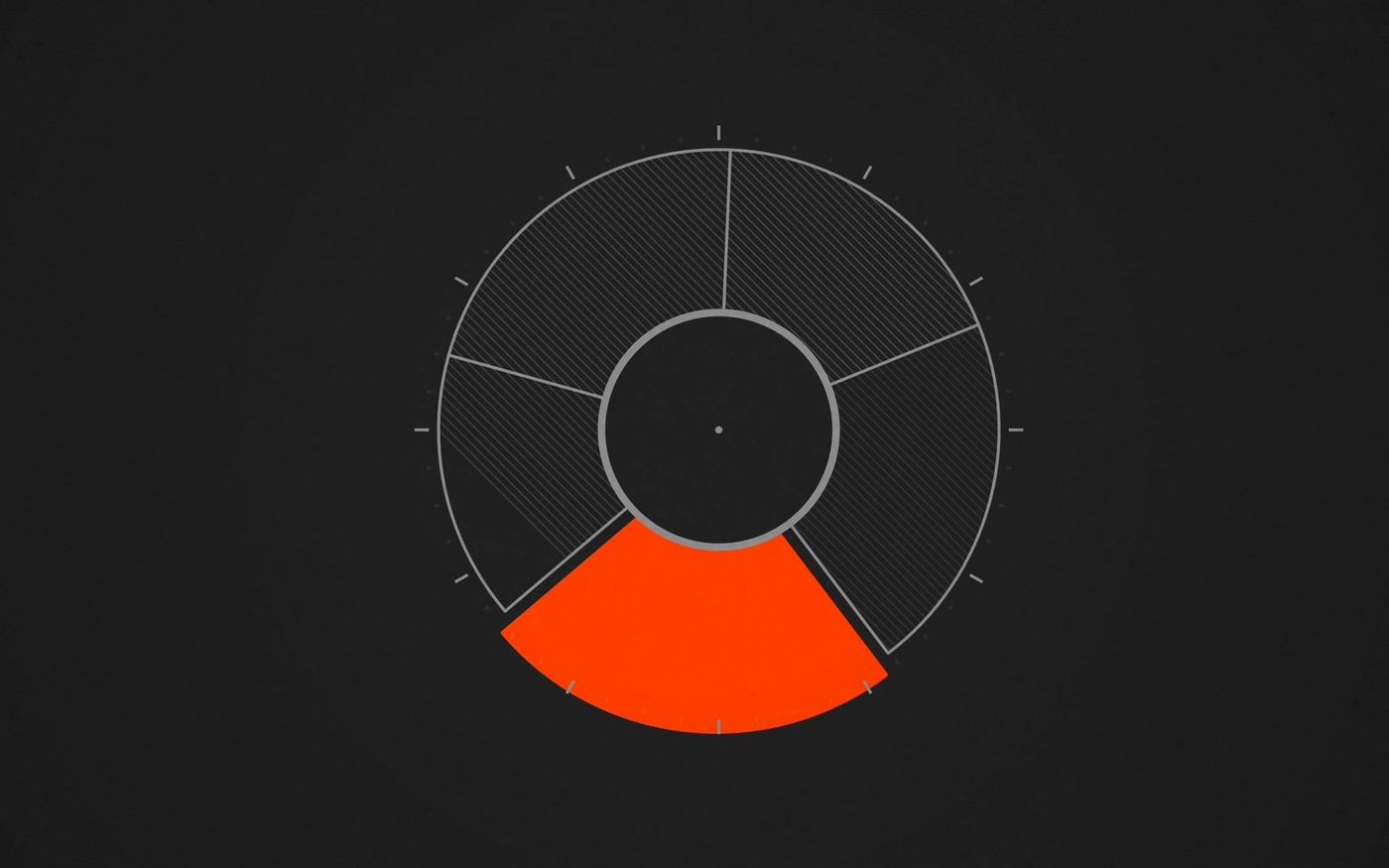
The IRS documented what that looks like at scale. According to the agency's own Data Book, more than 6 million civil penalties were assessed against businesses in fiscal year 2025. More than 1.2 million (20%) of those were specifically for late or missed payroll tax deposits.
A category of failure that a payroll platform should prevent automatically because the deposit schedule is known, the amounts are calculated when payroll runs, and the submission can be fully automated. When it isn't, the penalty lands on the company.
The Visible Costs: Accountant Work & Additional Platform Fees
Before getting to the hidden stuff, it's worth naming the visible costs most teams are already aware of but have rationalized.
Your accountant is doing work your payroll platform should be doing. When a quarterly tax filing needs to be filed across three states, or a tax notice arrives from an agency in a state where you hired your first remote employee last year, many payroll platforms pass that back to you. You then pass it to your accountant. That costs $150-$200 per filing, per issue, per state. Over a year across a multi-state company, that adds up fast.
You're paying for modules you had to add to cover gaps. The base plan didn't handle state registrations. The compliance add-on wasn't included. Multi-state management required a tier upgrade. Most companies on legacy platforms are paying 20-40% more than their base contract because the contract was designed with those gaps built in. Gusto, for example, charges approximately $200 per state tax registration form as a paid add-on. When you expand to a new state, that cost starts before you've run a single payroll cycle there.
These costs are visible in the sense that you know they exist. But most teams don't aggregate them. They live in different budget lines, different approval flows, different team inboxes. Nobody is adding them up against a single platform cost.
The Hidden Costs: Time & Penalties
Every time a tax notice arrives, someone on your team has to figure out what it means, decide whether to act on it, locate the appropriate government portal, and resolve it. Every time you hire an employee in a new state, someone has to open that state's tax accounts. Every time a quarterly filing is due, someone has to verify that it happened correctly.
Of the 6 million civil penalties the IRS assessed against employers and businesses in FY2025, 1,216,346 (20%) were specifically for failure to deposit payroll taxes on time. Not for fraud, not for misclassification, not for a complicated multi-jurisdictional dispute. For missing a deposit deadline. Here’s the thing: the deposit schedule is published, the amounts are calculated at payroll run time, and the due dates don't change. A platform that automates compliance doesn't miss this. The penalty is the last step in a much longer process that your payroll platform should prevent.
5 Signs It's Time to Switch Payroll Providers
- Your team is manually logging into government portals to register new employees, respond to tax notices, or file quarterly filings. If your platform is sending you to .gov websites, it is not handling compliance.
- Your accountant is doing payroll-adjacent work. If you're paying a CPA to resolve payroll tax notices, verify quarterly filings, or clean up state registration errors, your payroll platform is creating work your accounting firm is billing you to fix.
- You've had at least one compliance penalty in the past 18 months. An IRS notice, a state penalty, a missed filing deadline. These are not one-time events. They're signals of structural gaps in your current setup.
- You're hiring in new states and dreading it. Multi-state compliance is where most platforms drop the ball. If the prospect of a hire in a new state makes your HR team nervous, that's not a people problem. It's a platform problem.
- Your last support interaction required follow-up. Average response time at most legacy platforms is measured in days for anything compliance-related. If you’ve had a response time under two minutes from a real human, you'll know the difference.
The "Switching Is Too Hard" Myth
The fear of switching is the most successfully weaponized feature of every legacy payroll platform. Once a company has lived through one bad migration, the memory of that pain is more powerful than the ongoing frustration with the current platform.
But here's what's changed: the implementation experience is not what it was five years ago.
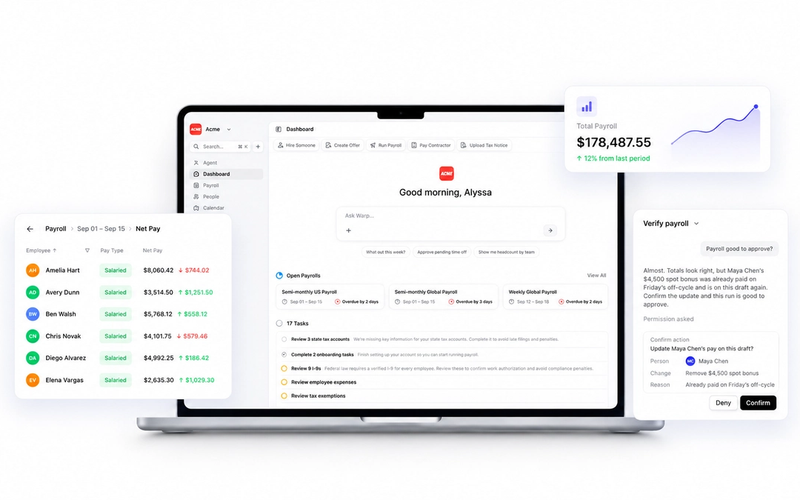
Warp is the only AI-native HR and payroll platform. Instead of clicking through clunky dashboards or .gov websites for taxes, Warp's AI agents open every state tax account, file every payroll form, and resolve every tax notice automatically. Every company gets a dedicated Account Manager and Benefits Advisor included to guide them through payroll setup, multi-state expansion, and benefits selection, so you don't have to spend hours on hold with tax agencies or worry about compliance mistakes.
The actual migration experience for most companies switching to a modern platform looks like this: a 10-20 minute kickoff call, a third-party admin login so the new platform can pull existing employee data, and a first payroll cycle live within two weeks. No year-long implementation. No team retraining marathon.
The memory of your last switch was probably a year-long implementation on a legacy platform built in 2009. That's not what switching looks like now.
Learn more about switching to Warp.
Frequently Asked Questions
What are the real costs of staying on the wrong payroll provider?
The direct costs include compliance fines, accountant fees to resolve tax notices, and state registrations. The indirect costs include HR staff hours spent on manual compliance work and the compliance liability that grows with each new state you hire in.
When is the best time to switch payroll providers?
The most common time is at the start of a new calendar year, since it keeps W-2s clean and avoids mid-year tax account transitions. But modern platforms can execute a mid-year switch cleanly, especially for companies whose primary pain point is compliance rather than year-end reporting. If you're about to hire in a new state, that is an ideal trigger: get the right platform in place before the compliance clock starts in that state.
Will I lose historical payroll data if I switch providers?
No. Your prior platform is required to provide your payroll history data on request. Your new platform imports it, and you maintain access to prior records through your existing system for the required retention period. Your employees' W-2s and pay history don't disappear when you switch.
What should I look for when evaluating a new payroll provider?
The two most important questions are: (1) Does the platform take full contractual liability for compliance errors? If they make a filing mistake, do they pay the fine, or do they send you a guide to fixing it yourself? (2) What is the actual support model? A dedicated account manager with a sub-two-minute response time is a different product from a support ticket queue.